

Tattoo aftercare
What to do in the first weeks so your tattoo heals well and stays sharp.
A fresh tattoo is an open wound. How it heals determines how its shading and contrast will look for years, and in black & grey realism, where everything depends on smooth grey transitions, poor healing shows more than in any other style.
The first hours
When the session ends, I cover the tattoo with a bandage. How long you keep it on depends on the type we use:
- Plastic film or regular bandage: keep it on for a few hours. Cleveland Clinic recommends at least three, depending on the size of the piece.
- Clear "second skin" film: it can stay on from 24 hours to several days, as long as it's comfortable and no fluid builds up underneath, according to the European Academy of Dermatology and Venereology (EADV).
To remove it, wash your hands, wet it with lukewarm water and peel it off slowly. Never rip it off dry.
Your daily routine
- Wash twice a day with lukewarm (not hot) water and a mild soap without fragrance or dyes.
- Pat it dry with a paper towel or a clean towel, or let it air-dry. Don't rub.
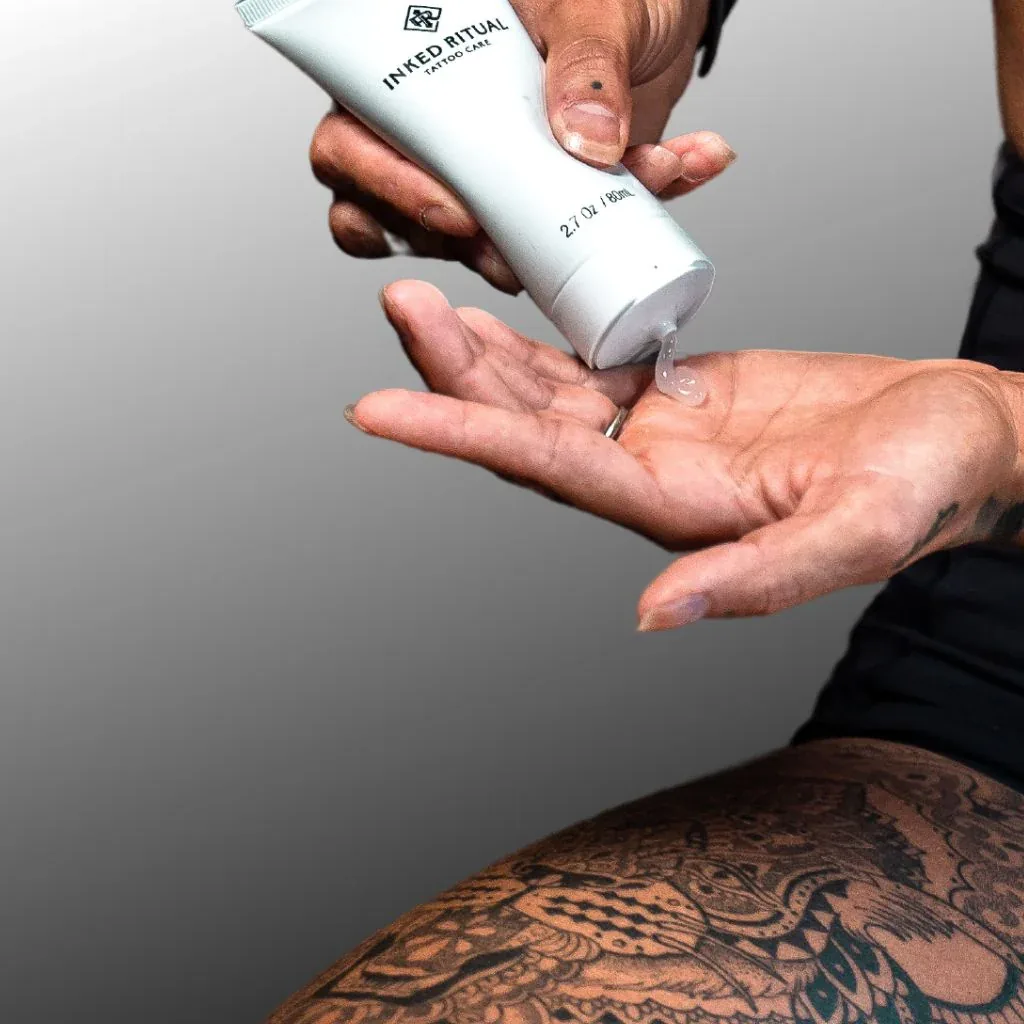
- Moisturize with a thin layer of the cream I recommend, two or three times a day. If your skin looks shiny or sticky, you used too much.
- Wear clean, loose clothing over the area, in breathable fabrics.
Itching and peeling are normal. However annoying it gets, don't scratch or pick the scabs: doing so pulls out ink and leaves light patches in the grey.
What to avoid while it heals
- Pools, the ocean, baths, hot tubs and saunas until it's fully healed. Showering is fine.
- Direct sun and tanning beds.
- Sunscreen on skin that's still healing. Cover it with clothing instead.
- Exfoliating the area or using petroleum jelly.
- Tight clothing, constant friction and workouts that make the area sweat a lot.
- Long flights right after getting tattooed, as the EADV recommends.
How healing progresses
- Weeks 1 and 2
Itching, peeling and thin scabs. It's normal for the tattoo to look dull or "milky".
- Week 3
The scabs finish falling off and the skin peels less.
- Around 2 months
The top layer of skin has healed and the tattoo shows its final look.
- The following months
The deeper layers of skin finish recovering. Keep protecting it from the sun.
Reference timeline from Cleveland Clinic. It varies with the size of the piece, the area and each person's skin.
Signs to see a doctor
Some redness and swelling in the first days is normal. See a doctor, and let me know too, if you notice:
- Fever or skin that feels hot to the touch.
- A bad smell, pus or heavy discharge.
- Pain that gets worse instead of better.
- Red streaks spreading out from the tattoo.
- A reaction, such as raised skin or intense itching, that lasts more than one or two weeks.
For life: protect it from the sun
UV light is what wears a tattoo down most over the years. Once it has healed, the American Academy of Dermatology recommends broad-spectrum sunscreen with SPF 30 or higher, applied 15 minutes before going out, covering it with clothing that doesn't let light through, and seeking shade. Keeping your skin moisturized with a fragrance-free cream also helps the greys stay clean.
This guide is for information only and doesn't replace a doctor's assessment. Always follow the instructions I give you at the end of your session.